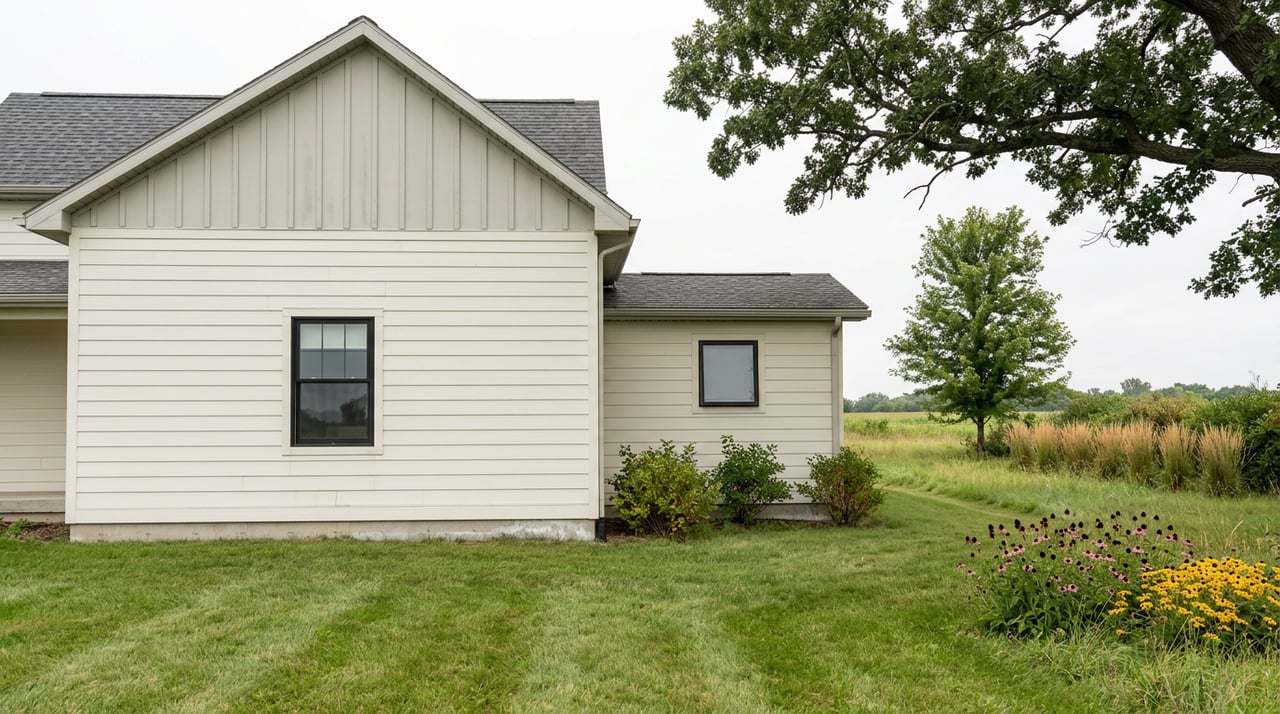
Selling a Marengo, Ohio Home With Well and Septic
August 20, 2026
August 20, 2026
Ask the Morrow County Health District whether you need a septic inspection to sell a home in Marengo, and the answer on their own website is blunt: a real estate inspection "is not required by the Morrow County Board of Health." No mandate. No fee schedule tied to closing. No health inspector standing between you and the title transfer.
Most buyers and sellers stop reading right there and assume the transaction is simpler than it would be in a county with a formal point-of-sale program. It isn't. The county's silence just means the actual gatekeeper is whoever is financing the deal, and that gatekeeper's rules can be stricter than any county ordinance on the books.
Morrow County's own sewage page describes the septic real estate inspection as something homeowners typically arrange because a bank asked for it, not because the health district requires it. That single sentence is the whole story for anyone buying or selling acreage around Marengo, where public sewer and water lines don't reach and nearly every home runs on a private well and an on-site septic system.
The catch is that most rural buyers here aren't paying cash. They're financing through programs built specifically for areas like this one, and those programs each set their own rules for water and waste systems:
| Loan type | Well water test | Septic evaluation | Notable standard |
|---|---|---|---|
| USDA Rural Development | Mortgage Research says a water quality test is required for bacteria, nitrates, and nitrites | USDA requires an evaluation performed by a health authority, licensed septic professional, or qualified home inspector | USDA requires a well to sit at least 50 feet from the septic drain field |
| VA | Required, results good for 90 days | Generally not required unless a problem is flagged | Water standards apply |
| FHA | Required, well must deliver at least 3 gallons per minute continuously | A septic requirement applies | Continuous flow rate is the specific trigger point |
| Conventional | Only if an appraiser or inspector notes a concern | Only if an appraiser or inspector notes a concern | Most lenient of the four |
Two nearly identical listings on the same county road can move through completely different closing checklists depending on how the buyer qualifies. A USDA buyer is locked into a mandatory septic evaluation and a water test before the loan can fund. A conventional buyer with clean inspection reports might close without either one. The county treats both buyers the same. Their lenders do not.
Even when a water test is required, the logistics aren't instant. The Morrow County Health District's private water program collects samples on one specific day each week, not on demand, and charges a $75 fee for the standard total coliform analysis, with additional charges if a lender wants lead or fluoride screened as well. If a positive result comes back, the district re-samples until the result clears, which can mean more than one week added to a timeline that already has an appraisal, an underwriter, and a closing date stacked on top of it.
This is the detail that catches people off guard. A buyer under contract with a 30-day close and a USDA pre-approval can lose real time to a testing calendar that doesn't bend for real estate deadlines. Ordering the water test the week an offer is accepted, rather than waiting for a lender to request it during underwriting, is the difference between a closing that holds and one that slips.
Because the county doesn't run its own point-of-sale program, the quality of a voluntary or lender-triggered septic inspection depends entirely on who performs it. Be Ohio, a Morrow County septic contractor that lists real estate inspection work specifically in Marengo, describes projects that include deep line replacements near the Heartland Conference Center, alongside similar work in Mount Gilead and Cardington. Their real estate inspection covers the tank, lines, fluid levels, baffles, cleanouts, and drain field condition, documented for escrow.
That level of detail matters because a septic system's failure points aren't visible from the yard. A tank can look fine from the lid and still have a compacted drain field underneath it, the kind of problem a flow test alone won't catch but a pump-and-inspect will. If you're financing conventionally and no lender is forcing the issue, ordering that inspection yourself before you're deep into a contract is the only way to know what you're actually buying.
Buyers who close on a Marengo property and start planning an addition, a pole barn, or a garage run into a second version of the same pattern. Morrow County requires a zoning permit for any structure with a roof, but the county's own zoning FAQ states plainly that the state's residential building code "is not currently being enforced" locally. There's no state-certified building department checking wiring, egress, or smoke detector placement the way a city inspector would.
That doesn't mean anything goes. Setbacks still apply, and for residential and agricultural districts they're specific: a minimum 35-foot front yard measured from the edge of the right-of-way rather than the center of the road, a 15-foot side yard, and a 40-foot rear yard. Get the permit, respect the setback, and the county's role largely ends there. The safety-code inspection a city buyer might expect simply isn't part of the process here, which means the burden of verifying wiring and construction quality on any addition falls more heavily on the buyer's own due diligence than it would inside a municipality with an active building department.
For anyone about to put an offer on a well-and-septic property near Marengo, the sequence that avoids the worst surprises looks like this:
Does Marengo require a septic inspection to sell a house? The Morrow County Board of Health does not require one. Whether an inspection happens depends on the buyer's lender.
How much does the county's well water test cost? The standard total coliform test through Morrow County Health District runs $75, with additional fees for extras like lead or fluoride screening.
Will a VA loan require a septic inspection in Marengo? Typically only if an inspector or appraiser flags a problem. VA guidelines focus more heavily on the water test than on the septic system itself.
What happens if the well water test comes back positive for bacteria? The health district re-samples until a clean result comes back, which can add real time to a closing timeline if it isn't caught early.
David E. Straight has spent his career translating exactly this kind of local mechanics into a plan clients can actually execute, whether that's a veteran using a VA loan on a well-and-septic property or a family financing through USDA Rural Development. If you're weighing an offer on acreage near Marengo and want to know which inspections your specific loan program will actually require, reach out to Straight 2 Closing and get a straight answer before you're under contract, not after.
This article is general information, not legal, tax or financial advice. Consult a qualified professional about your situation.


Trust him to guide your real estate journey with clarity and dedication. With David’s local insight, strong marketing, and client-first approach, he makes buying or selling smoother, smarter, and more rewarding.