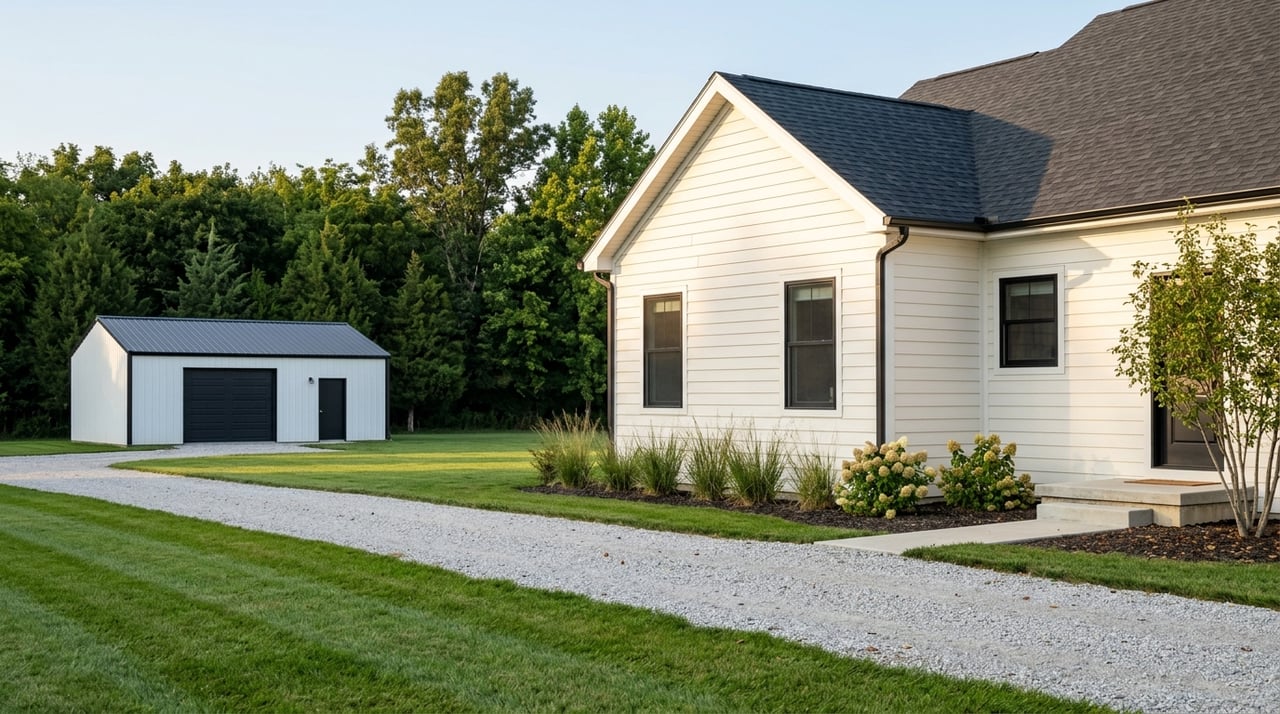
Marengo Ohio Land for Sale: A Smart Acreage Guide
May 7, 2026
May 7, 2026
Buying land sounds simple until you realize one parcel can be build-ready and the next one can come with major limits. If you are looking at land or acreage in Marengo, Ohio, you need more than a quick online search and a walk of the property. You need to know who governs the parcel, what the land can legally support, and whether utilities, septic, water, and access actually work for your plan. Let’s dive in.
In Marengo, land should be reviewed parcel by parcel. A property inside the Village of Marengo can follow different rules than land outside the village limits, and that difference can change what you can build and what approvals you need.
The Village of Marengo advises buyers to verify whether a parcel is inside village limits by checking the Morrow County Auditor map and search tools before moving forward with a project. That first step matters because village rules may apply inside the boundary, while township or county rules may apply outside it.
Outside the village, zoning is not the same across all of Morrow County. According to the Morrow County Engineer, some townships use county-wide zoning, some have their own township zoning, and some are not zoned at all. If a parcel is in an unincorporated area that adopted county zoning, a new dwelling permit is required in those county-zoned areas.
Before you get attached to a piece of land, confirm exactly who regulates it. That means checking whether the parcel is inside the Village of Marengo or in township territory, and then identifying the zoning district that applies.
This is especially important if you plan to build a home, add a barn or shed, run a home-based business, or use the land for agricultural purposes. The county zoning resolution allows agricultural use in some districts, while certain other uses may require a conditional-use certificate.
The village also encourages property owners to contact the zoning inspector before adding structures or features such as a porch, deck, shed, garage, patio, fence, or home-business use. If you are buying with a future project in mind, this is not a detail to leave until after closing.
A beautiful lot does not help much if access is unclear or expensive to create. In Morrow County, road and access issues should be checked early so you know whether the property has workable frontage and legal access.
The Morrow County Engineer handles permits for driveway culverts and private culverts, road bore and road cut work, right-of-way work, and utility work. The office also maintains tax maps, property boundary surveys, subdivision plats, and road maps that can help confirm frontage and access.
If you expect to build a driveway, install a culvert, or bring utilities across a right-of-way, those steps may require permits or design coordination. This is one of the easiest places for land buyers to underestimate cost and timing.
The best land purchase is the one that fits your actual plan, not just your budget. If you want a future home site, hobby farm setup, small outbuilding, or room to divide land later, those goals should shape your due diligence.
Under the county zoning resolution, some accessory buildings under 120 square feet and not on a permanent foundation do not require a zoning permit. Larger accessory structures can still be regulated, so it is smart to verify requirements for any future barn, garage, shed, or RV-related structure.
If you think you may split the land later, do not assume that will be easy. Morrow County subdivision regulations state that land cannot be subdivided without approval, and lot split or minor subdivision review can involve the technical review board along with health, engineering, soil and water, and zoning agencies.
The county rules also include frontage and lot-size standards for minor splits. That means a parcel that works well for one owner today may not automatically work for a future split tomorrow.
Not every issue shows up from the road. Drainage patterns and flood-zone concerns can affect where you place a home, whether a septic layout works, and how usable the land feels over time.
Morrow County GIS data includes tax parcels, jurisdictions, centerlines, rivers and lakes, and DFIRM flood-zone layers. Reviewing those layers can help you understand whether part of the property may sit in a flood-prone area or have drainage conditions that could affect building plans.
This is one of the most important checks for raw land because moving a building site, driveway, or septic area later can be far more difficult than identifying concerns before you buy.
When buyers picture land, they often focus on size, views, and price. In reality, utility availability often decides whether a parcel is practical.
Inside the Village of Marengo, the village utilities page lists Del-Co Water for water service, the Village of Marengo for sewer, AEP for electric, and Consolidated Electric for natural gas. Even so, you should still verify whether a specific parcel is actually served by those utilities or whether extensions or private systems are needed.
If a parcel is outside the utility service area, your plans may depend on a private well, septic system, or both. That can affect design, cost, timelines, and financing conversations.
For many acreage purchases, soil and septic feasibility are the make-or-break issues. A parcel is not truly buildable just because it looks open and dry from the road.
The Morrow County Health District outlines a new-home process that starts with contacting a soil scientist and a system designer. Buyers then need a soil evaluation report, house plans, a housing number, and system design documents for sanitarian review.
The Health District’s forms also show that these approvals are time-sensitive. Septic permit approval expires if the project is not completed within 12 months, and site and plan approval expires after 5 years.
Ohio State University Extension explains why the soil review matters so much. Soil depth, permeability, and saturation help determine what kind of treatment system a lot can support, and deeper soils above a limiting layer are generally better suited to soil treatment systems.
If the property will rely on a private well, water quality needs its own review. EPA states that private wells are not regulated by EPA and recommends annual testing for total coliform bacteria, nitrates, total dissolved solids, and pH, along with immediate testing after repairs, flooding, or major site changes.
When buyers find the right piece of land, it is tempting to start with the lender or builder conversation. In Marengo and the surrounding Morrow County area, the smarter path is to confirm feasibility first.
That means checking zoning, access, floodplain or drainage concerns, utility availability, septic feasibility, and water planning before you build out a financing strategy. If you skip that order, you may end up budgeting around a plan the land cannot support.
The Morrow County Health District’s new-home process gives a helpful sequence. It includes house-number assignment, zoning permit, septic and well steps, and soil and system review before final site review and permit issuance.
The Health District also warns that if construction begins before septic design approval, the buyer assumes the risk of redesign or possible relocation of the septic system. That is a strong reminder to slow down and verify the site first.
Once the parcel checks out, financing options become much easier to evaluate. For rural primary residences, USDA Rural Development says eligible buyers may be able to purchase or build with no money down through its Single Family Housing Direct and Guaranteed programs, based on income and location.
If your plan includes agricultural use, USDA says Farm Service Agency farm ownership and operating loans may be used for land, livestock, equipment, feed, seed, supplies, buildings, and farm improvements for family-size farmers and ranchers who cannot obtain commercial credit.
If you are a veteran, VA home loan benefits may also be part of the conversation. VA states that the benefit can be used to buy, build, or improve a home, and its farm-loan guidance notes that the benefit may be used for a farm only when there is a residence on the land and the veteran occupies it as a primary residence.
Construction financing may also come into play if you plan to build. The key is to talk through those options after the property has cleared the land-use and site-feasibility checks.
If you want a practical way to evaluate a parcel, start here:
Buying land can be one of the most rewarding moves you make, but it usually takes more due diligence than buying an existing home. If you want a clear, local, step-by-step approach to evaluating acreage in Marengo or anywhere nearby in Central Ohio, David E Straight can help you sort through the details and move forward with confidence.


Trust him to guide your real estate journey with clarity and dedication. With David’s local insight, strong marketing, and client-first approach, he makes buying or selling smoother, smarter, and more rewarding.